ProFiles | Jon Nicholson image

ProFiles | Jon Nicholson

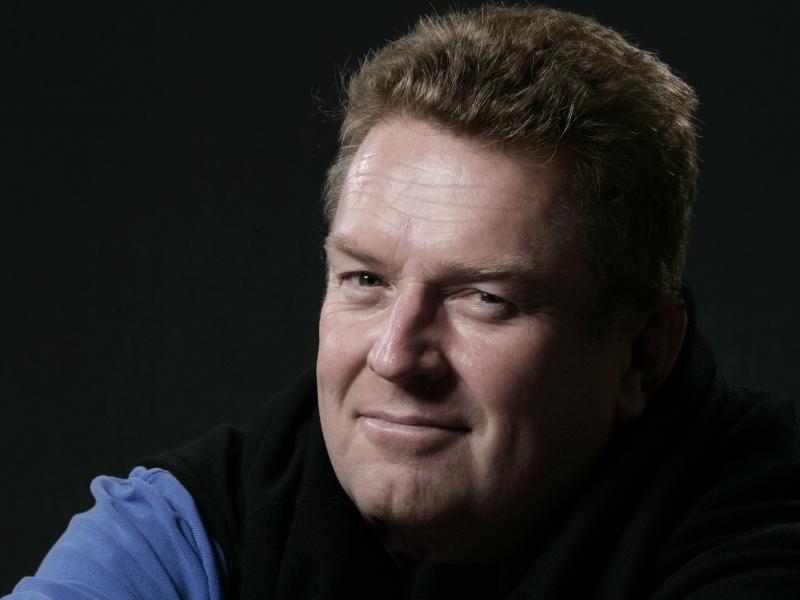
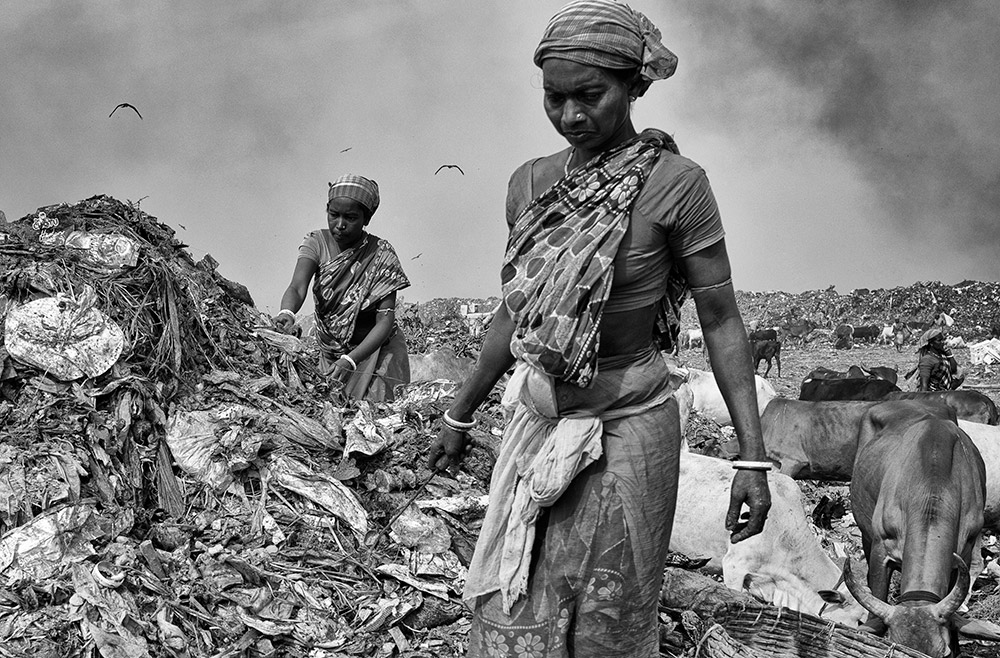
Jon is an established photographer and well known for the exclusive access he is granted. His area of expertise is to follow his subject intently, be it an individual or situation, and document the whole story, returning to his subject over and over again.

We recently caught up with Jon in the Fixation showroom and asked him about his work.
© Jon Nicholson

How did you first get interested in photography?

I can’t really remember to be honest. I would take pictures with a friend for fun, climbing around the old Battersea power station in the late 70’s and processing film in the bath, with not much success! Then I got into windsurfing and that’s really when I thought I would give it a whirl and start taking pictures, as I loved – and still do – going to the beach, stormy clouds etc… that would have been around 1980.
© Jon Nicholson

You worked a lot in the sports industry before concentrating on the more intimate, behind-the-scenes work. How did that transition come about?

Following on from above, once I got the bug I would really study the great photojournalists of the time; the obvious names like Don McCullin etc., thinking I should do this in sport. My old pal Damon Hill then got the drive at Williams F1 and I suggested that we should do a book showing what life was really like for a top sports personality. I showed Damon a book by Walter Iooss on Michael Jordan called Rare Air. It’s a brilliant book and is a great guide to shooting a behind the scenes story with somebody as huge as Jordan. That was 1994 and Damon was racing with Ayrton Senna after a year with Prost. Ayrton got killed and Damon became huge. Following that, a lot of sporting teams asked me to do projects with them. After a while I wanted to move into other areas and my strength was getting access and putting long term projects together, plus I started to read the newspaper covers and wanted to shoot more global issues, so off I went, working with papers like the Guardian, Observer and Mail on Sunday.
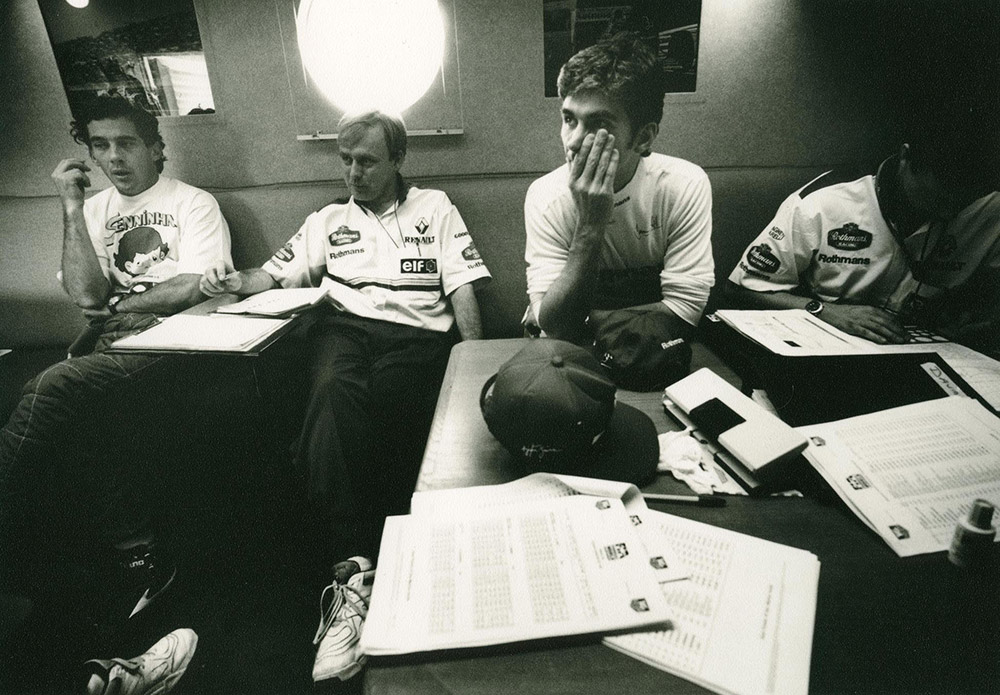
© Jon Nicholson

You work a lot with aid agencies, covering current affairs. Do you find you have to disassociate your personal feelings when photographing in these situations, or would that be detrimental to your work?

I spent years working with UNICEF from New York to Africa, covering stories on HIV/AIDS, conflict and post conflict stories, so I saw some stuff.  I am by no means a war photographer but in that part of the world during the 90’s there was some fairly nasty things going on and you couldn’t help but be affected by it. I would wear my sunglasses all the time and that gave me a barrier, but there comes a time when it gets to you. I was going to Darfur to shoot a project with the UN and and was the only guy allowed in there at the time. I wanted to shoot this in a different way so I was going to do a series of digital composite images. The Sunday Times magazine were going to run it and I had an exhibition planned in the west end, but before I went, my daughter Maisy had said to some friends we were lunching with that I was going to Darfur to get Shot!!! At that point I decided that I had to stop that kind of work. I did almost get shot and very nearly got caught up in a very nasty life ending situation. So to answer your question – yes, but also no; you are there because of the person you are and how you work and interact with the scene. I don’t think I was any different as a person.
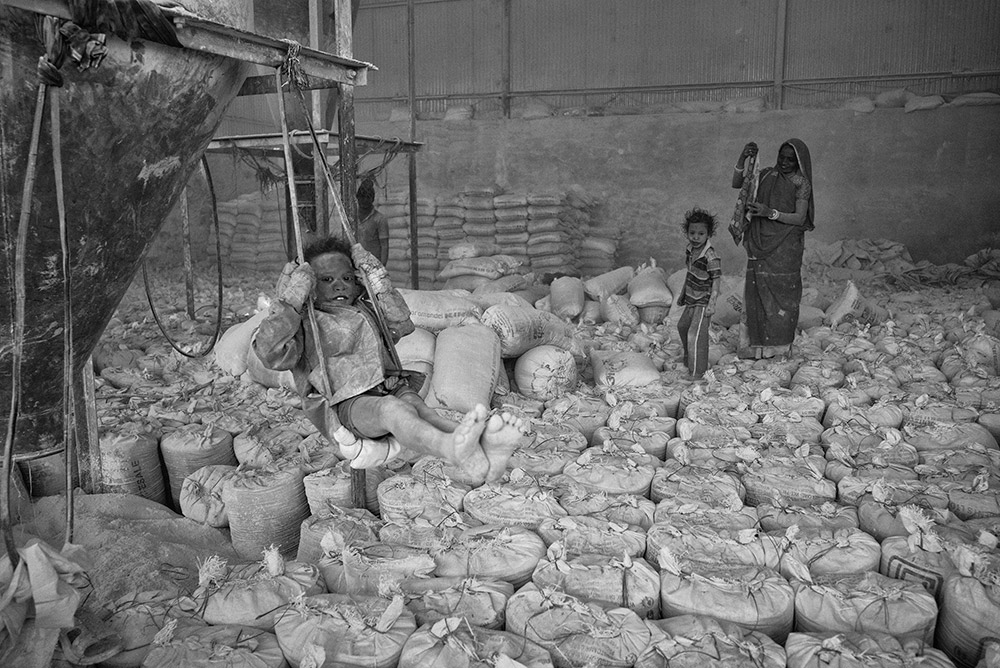
© Jon Nicholson

Any interesting projects that you’re working on at the moment?

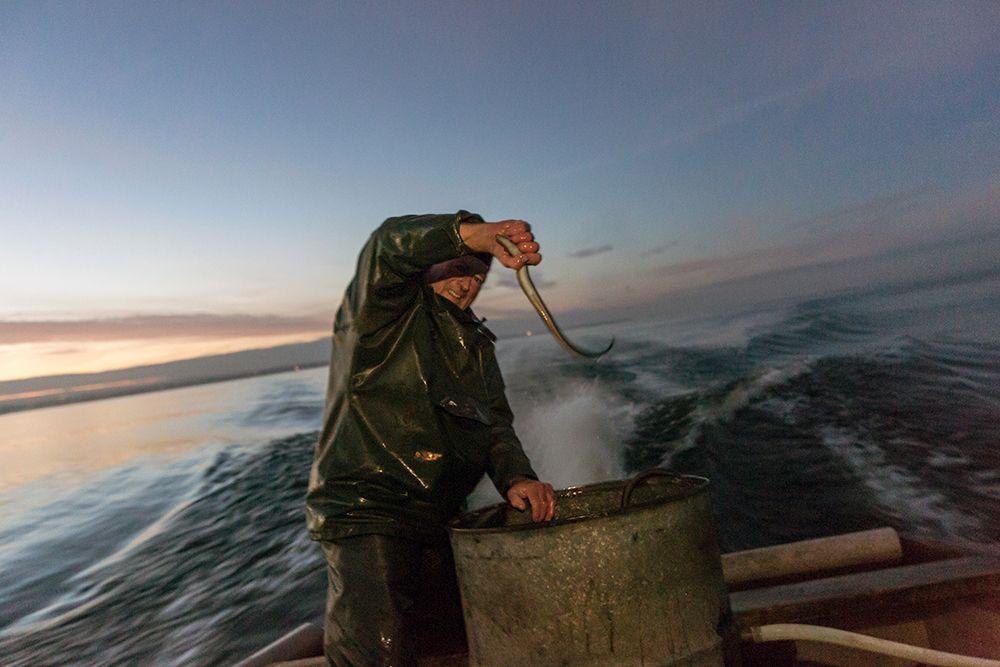
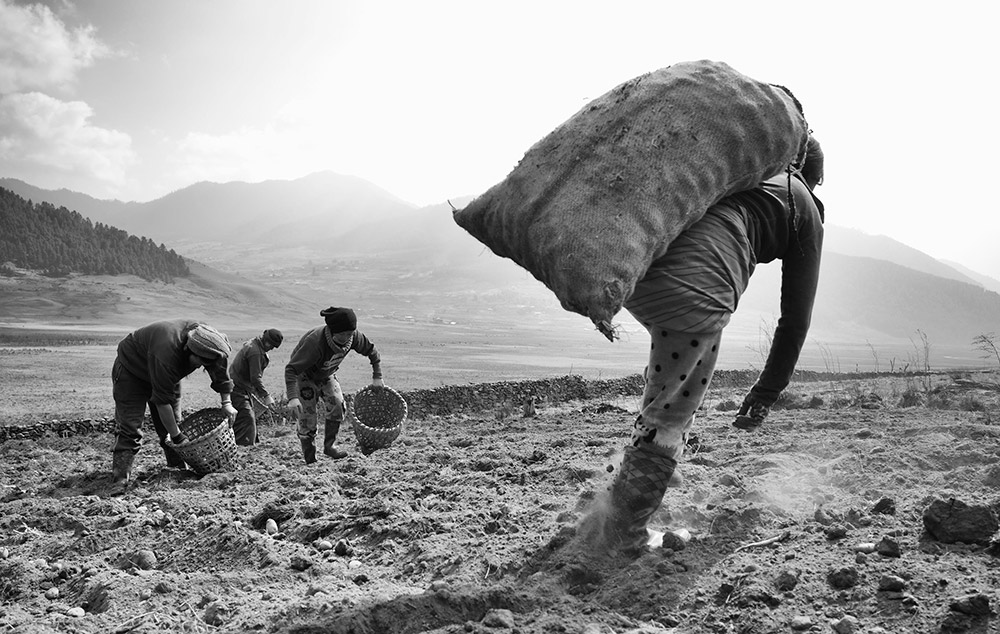
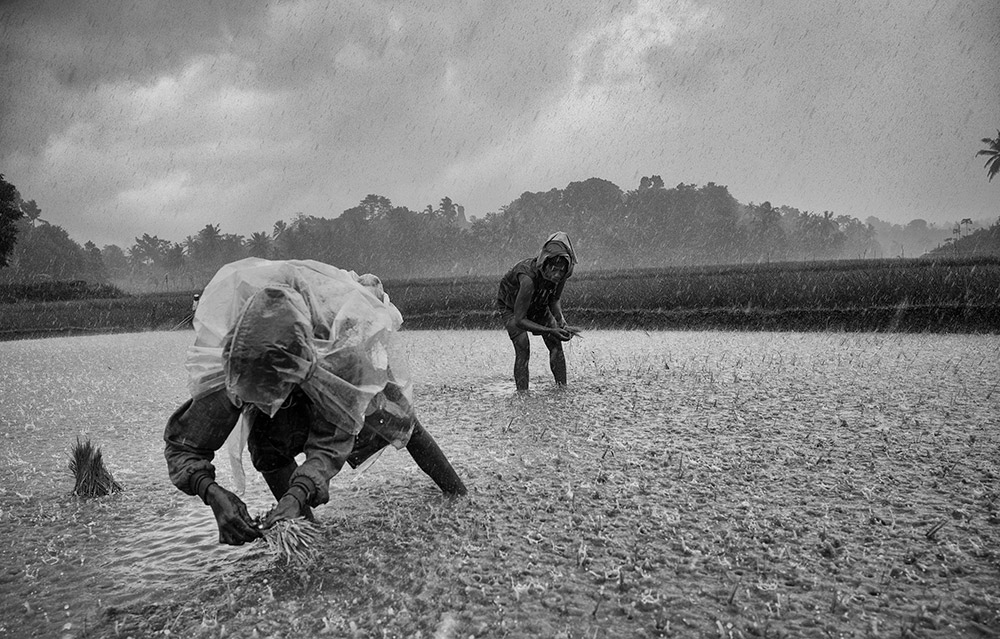
Yes, I’m working on a three year project which is on Working women in Asia. It’s for a corporate client from Singapore, all in black and white as well which I love. Travelling throughout Asia at my own pace at different times of year and doing what I want….how lucky am I in this day and age?!! This finishes in March next year so as a freelancer it’s time to get the thinking cap on. About 90% of my work is self generated and I’m fortunate enough to get funding for it.

I am also starting a semi-fictional piece of work in the footsteps of my father, based around St Tropez and Southern Spain and using digitally manipulated images. It’s about adoption – something close to my heart as I was adopted at three days old. I know my mothers side of my background and even know my birth Uncle. Sadly my mother is no longer alive, but at least I have a great deal of info, and I know my father’s name and age and where he came from.

I tend to buzz around a few projects at one time.
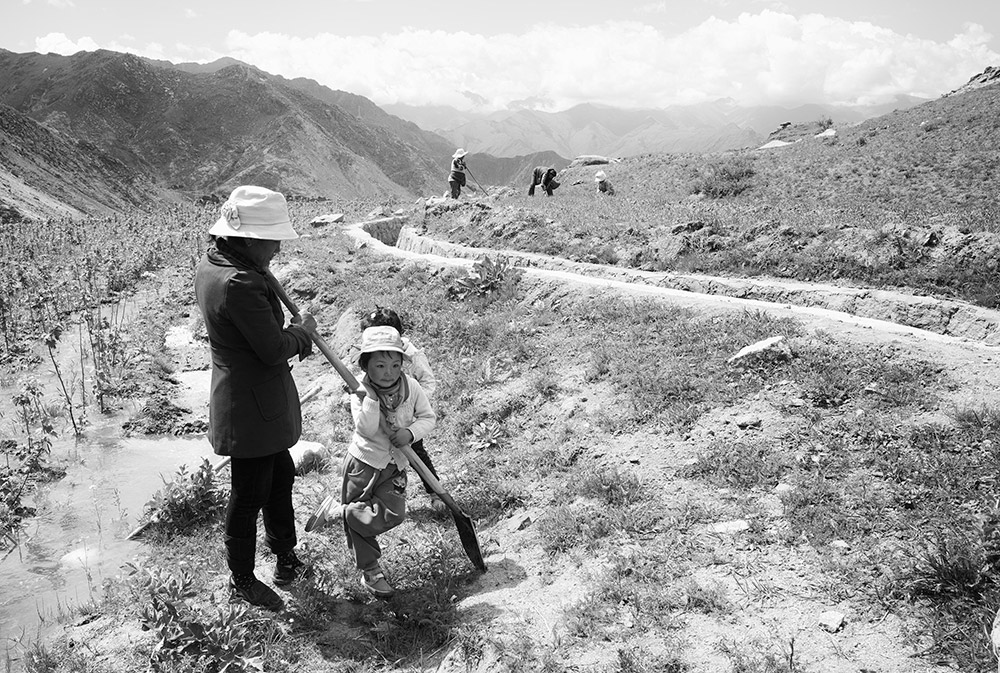
© Jon Nicholson

You’ve been a customer and friend of Fixation’s for a long time. How much do you rely on us for your work?

Well Bob Martin told me to go to Fixation in about 1986 and I have been coming to you ever since. I am a Leica M user and over the years have relied on Fixation, mostly when using Nikon and you are an essential tool in my toolbox. Fixation gave all of us professional photographers what we needed and still need do – and now you supply Leica I will be continuing my long friendship with you all!  We are a lonely bunch and it would great if you had a bar! We could all get together and talk rubbish to each other.
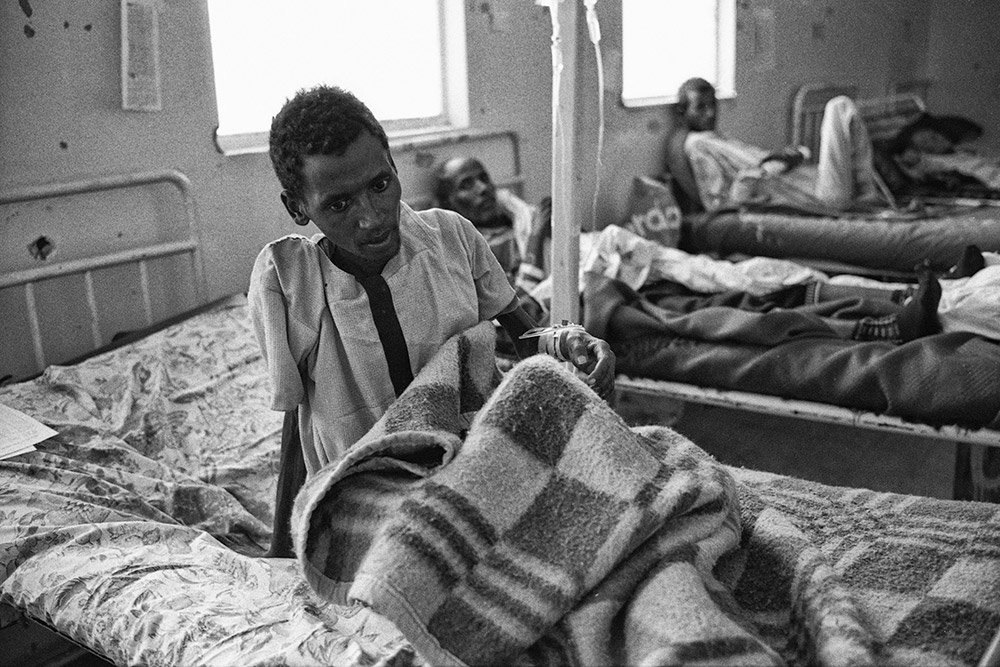
© Jon Nicholson

You still shoot film for some of your work. Do you feel this gives you an edge by effectively slowing you down?

I don’t think it gives me an edge, but I think it reiterates my passion for what I love to do – take pictures. Yes it slows you down and makes you think about the image you are making. Our industry, as we know, has been murdered by digital technology but without knowing how to shoot film how can I work digitally properly? It makes my work better. Plus I use the Leica Monochrom 80% of the time and that puts me in a mental state of shooting film, popping in the old Tri-X or HP5. Shooting both is brilliant! waiting for the negs to comeback from Metro and that excitement of seeing what I got or missed is a thrill in itself. Whilst writing this I am working in Sri Lanka shooting on my Hasselblad 503 and FP4 (plus my Leica’s).
© Jon Nicholson

When we spoke recently we were discussing guitarists and their guitars, and about the relationship players have with their instruments. With your style of photography, do you feel the same bond with your cameras?

Yes definitely –  I think in the film days when we didn’t change our gear as often, I certainly had favourite cameras and lenses. Even now my Leica’s have names; my Leica Monochrom is called Lulu and my M240 called Elsa after my two youngest daughters. A bit silly maybe, but actually in a way I’m trying to share what I see whilst I am away. I use these two the most as the Leica M’s are the best cameras for what I do, and I feel very attached to them. I also use my Hasselblad 503 called Sam (my son), a 5 x 4 camera called Maisy, and a Gandolfi 10 x 8 camera called Molly… And the camera with no name is a Noblex panoramic camera.
© Jon Nicholson

You use quite a variety of different cameras in your work. Any particular favourites? 

As I mentioned above, they all have a place but my Leicas are undoubtedly my favourites at the moment.

I saw recently that your 2001 book, Land Of The Cowboy, is to be republished. You must be pleased?!

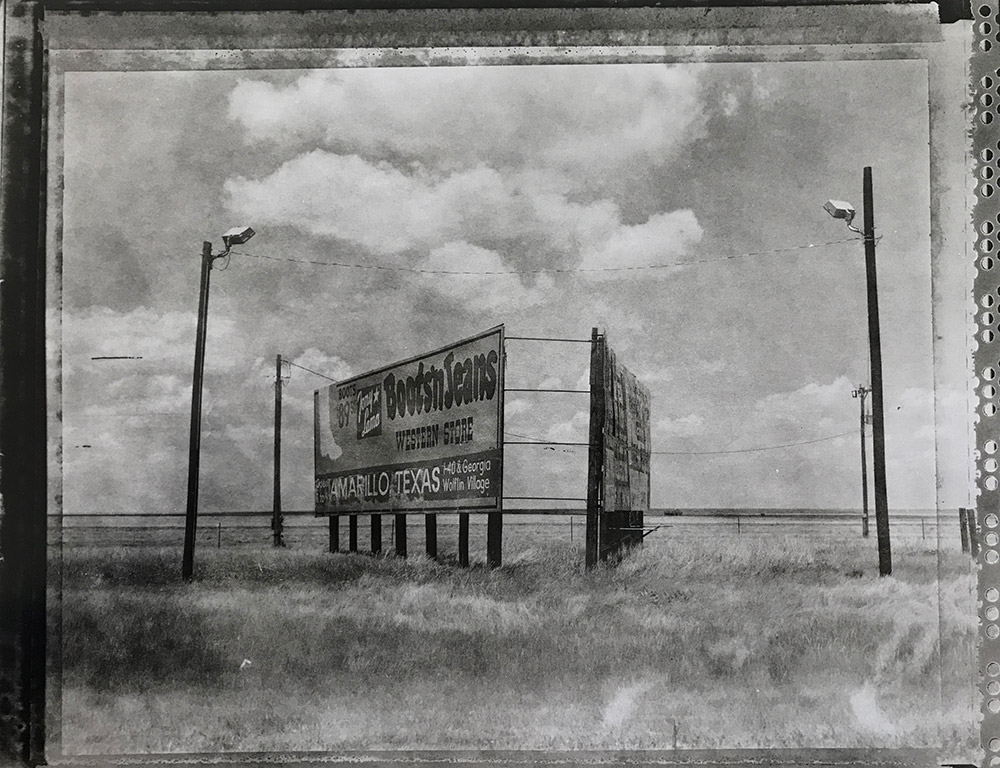
In 1996 I started a personal project looking at the cowboy and the pressures facing that way of life. Shot mainly in Texas, New Mexico and Arizona, it was then commissioned into a book. It was all shot on film using a 5 x 4 MPP (I shot loads of type 55 Polaroid!), my Leica M6’s, and a Hassleblad X-Pan.
Amarillo-boots-sign-1000px© Jon Nicholson

Now, almost 20 years later, it is to be re-published including 20 or so new images, again shot on 5 x 4 – both film and type 55 – which I shall do so later this year. I’m particularly pleased as there is no funding needed, and it’s a solid body of personal work – probably my best during my career for many reasons. Looking at the prints I made back then, they have a beauty that is hard to find with digital. And let’s face it – who doesn’t want to ride across the plains of Texas, singing Willie Nelson songs!

Expected publishing date Autumn 2018.

Jon was talking to Tim Stavrinou. For more information on Jon’s work, visit his website www.jonnicholson.co.uk and follow him on Twitter @jonnicphotos
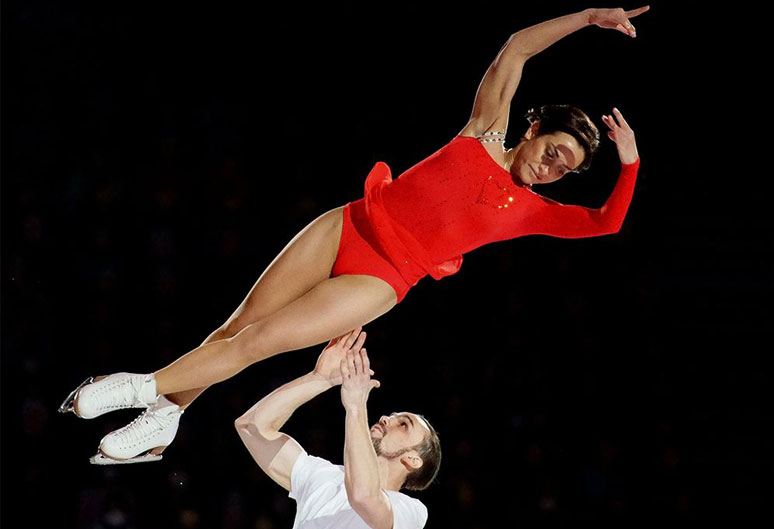
 

Bob Martin tests the Sony A9

Bob Martin tests the Sony A9

Bob Martin is a multi-award winning sports photographer specialising in shooting sports and action pictures for advertising, corporate and editorial clients.

During a career spanning thirty years, Bob has photographed every major sporting event; from the last fifteen Summer and Winter Olympics, to Elephant Polo and Horse Racing on ice. His work has taken him to the farthest corners of the world and his photographs have been published in  numerous publications including Sports Illustrated, Time, Newsweek, Life Magazine, Stern, Paris Match, Bunte, L’Équipe, The Sunday Times and the New York Times to mention a few.

BobMartinHeadDuring the London 2012 Olympics he was appointed as Photo Chief. He was a consultant on photographic issues to the Rio 2016 Olympic organising committee and is currently consulting for the IOC looking at the Tokyo Olympics in 2020.

Bob’s photography has been recognised by more than 60 national and international awards.

He is a three times winner of the prestigious British Sports Photographer of the Year also having won the World Press Photo Sports Picture in 2005. In 2017 Bob was awarded the coveted  “Sports Photojournalist of the Year” in the NPPA Best of Photojournalism Awards in the USA.

In 2016 Bob published a book of his Photography “1-1000th” which won the Sportel International Sports Book Award and also the Illustrated Book of the Year in the UK Cross Sports Book Awards.

Bob is Director of Photography and a co-founder of the Silverhub Media agency.

Bob had the opportunity to test A9, along with a set of G Master lenses, including the new 16-35mm and 100-400mm.

SI-852_TK3_0340-compressorSony ILCE-9 + FE 100-400mm ƒ/4.5-5.6 GM OSS | © Bob Martin

You’re usually a Nikon user. What made you want to try the A9?

The silent shutter was a big deciding factor in me trying the camera. With my sports photography, being able to shoot unnoticed was a huge advantage, especially in situations like golf tournaments. Funnily enough though, when shooting portraits, I found that the lack of shutter noise caused a problem with some subjects; they didn’t know if I’d taken the shot and were unsure if they needed to try another pose! It’s easy enough to turn the sound back on, so this was soon remedied.

BM_DSC09142-compressorSony ILCE-9 + FE 70-200mm ƒ/2.8 GM OSS w/ 1.4x Teleconverter | © Bob Martin

Are there any particular features of the A9 that stood out as beneficial

To be honest, I wasn’t expecting to like the electronic viewfinder as much as I did. Being able to preview the shot, especially in mixed lighting conditions was a big bonus and the detail through the finder is unbelievable. As I mentioned before, the silent shutter is amazing, especially when you can fire off 20 fps without anyone realising. I also liked the weight of the camera – much lighter than my Nikons, although I found the camera a bit front heavy when using longer lenses. Once I put the battery grip on, the balance improved dramatically.

SI-852_TK4_0019-compressorSony ILCE-9 + FE 24-70mm ƒ/2.8 GM | © Bob Martin

Was there anything you particularly didn’t like about the camera?

I was very pleased too see Sony had included an ethernet port on the A9, but at present you can’t shoot and send files at the same time. Hopefully something that can be rectified with a firmware update?

How did the Sony lenses stack up against your Nikkors?

The G Master lens series are as good as they get. I couldn’t really see any difference between these and my Nikon glass.

SI-852_TK7_0091-compressorSony ILCE-9 + FE 85mm ƒ/1.4 GM | © Bob Martin

Do you think this camera is a game changer for sports photographers?

Definitely. The ability to shoot quickly and silently, especially in short lens situations offers a massive advantage.

SI-852_TK1_0244-compressorSony ILCE-9 + FE 16-35mm ƒ/2.8 GM | © Bob Martin

You’ve been a customer and friend of Fixation’s for a long time. How much do you rely on us for your work?

Fixation is the only camera dealer in London as far as I am concerned. The level of professionalism in the sales people is unique and the combination of Sales or Repair gives me a one stop shop.

SI-852_TK6_0172-compressorSony ILCE-9 + FE 24-70mm ƒ/2.8 GM | NB. This shot was taken through glass | © Bob Martin

Bob was speaking to Tim Stavrinou. You can see more of Bob’s work on his website www.bobmartin.com and follow him on Instagram @bubblesontour

JACK TERRY TESTS THE SONY A9 image

Jack Terry tests the Sony A9


Fixation ambassador Jack Terry is a successful lifestyle and advertising photographer and works with high profile brands such as Audi, Nintendo and Lenovo. Despite his busy workload, Jack shoots a lot of personal projects – to try new concepts and explore ideas that he’ll incorporate into his commercial work.

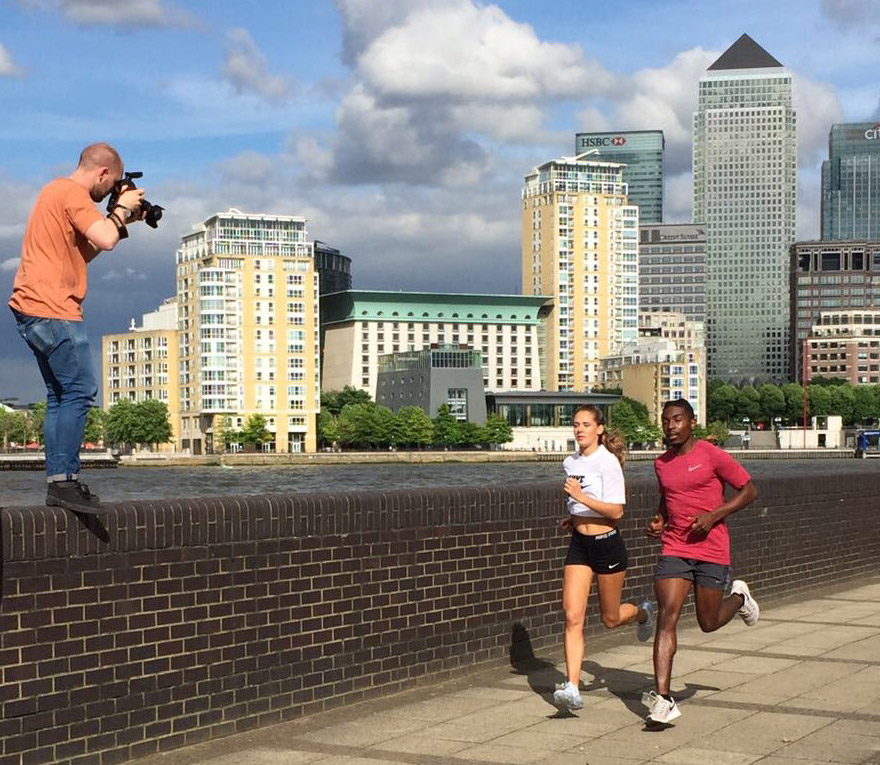
jack-bts-sony-a9When Sony announced the A9 earlier this year, we approached Jack and asked him to try the camera alongside his usual Canons. As luck would have it, he was planning to shoot a couple of athletes for his latest fitness portfolio – something the A9 would be perfect for.

Using a new camera – let alone a new camera system – can be a daunting task, trying to find familiar settings and customising the camera so Jack had the camera for a couple of days before the shoot.


Apart from the obvious differences between the A9 and your usual Canons, how easy was it to get to grips with the Sony?

“To be honest, within 10 minutes of handling the A9, I felt pretty comfortable with the camera. A lot of the controls I’m used to such back button focus and command dials were in a similar place to my Canon Cameras, so it didn’t feel too different to use. I spent some time going through the various AF settings, as I was planning on shooting a couple of sprinters, and the menus were fairly self-explanatory.”

Armed with a G Master 70-200mm ƒ/2.8 and a Zeiss ZA 24-70mm ƒ/4, but never having shot on a Sony before, Jack wasn’t sure how the lenses would stack up against his L Series glass.

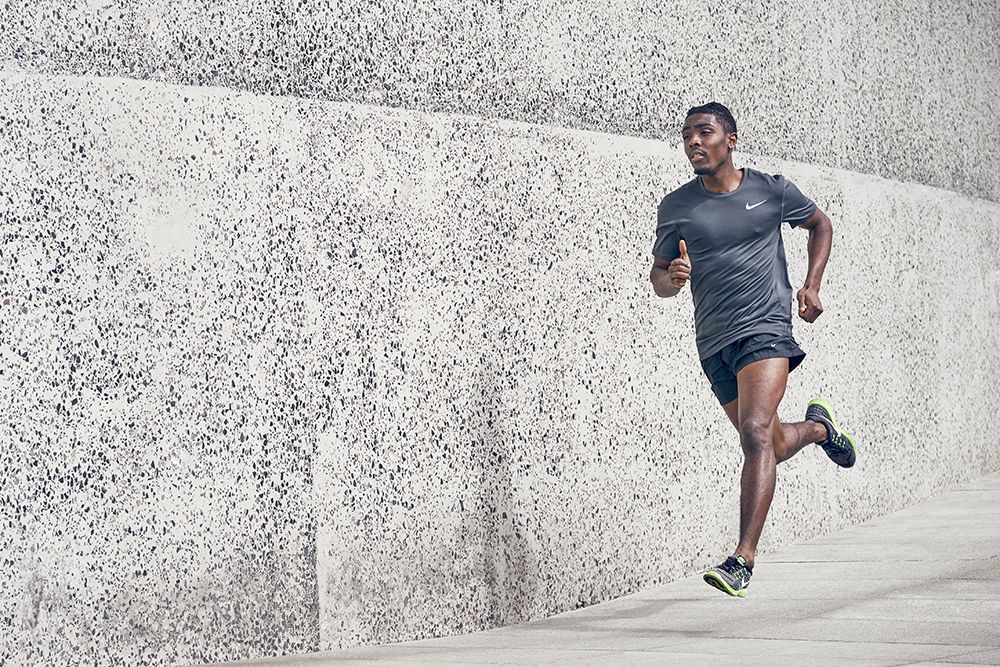
“The first shot I set up was a runner sprinting alongside a plain wall” explains Jack, “and being familiar with Canon, I tested the shot with a 1DX Mk II first.

“Reviewing the images in Capture One, I noticed the focus kept slipping to the wall, so I thought it would be a good time to test the tracking focus of the Sony”.

© Jack Terry

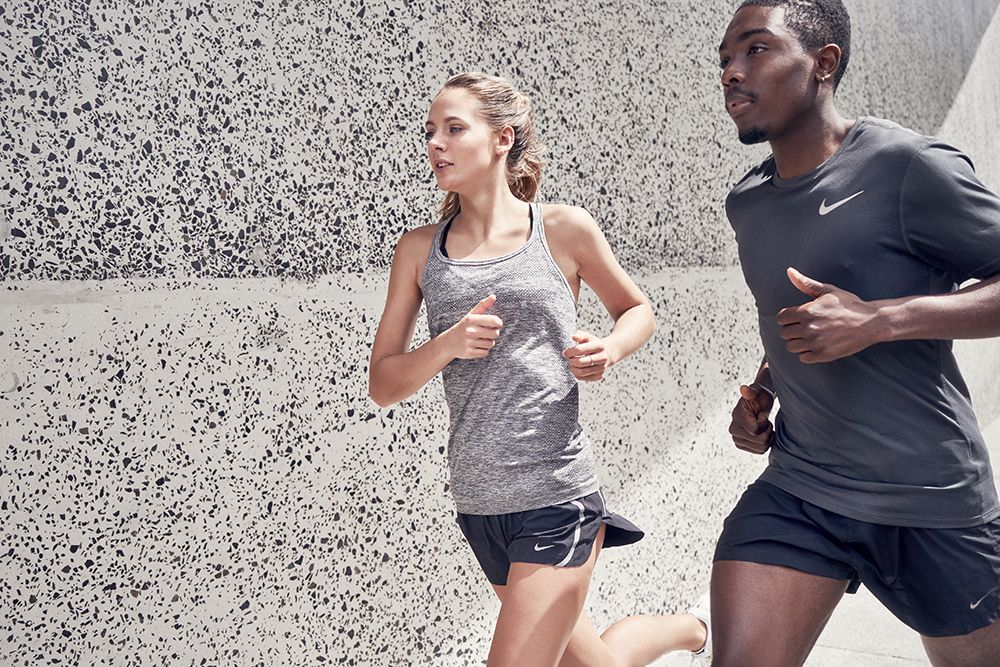
“When I was happy we had the first shot, I reviewed both sets of images side by side and was amazed to see that every single shot on the Sony was pin sharp. Even at 20fps, the AF had stayed on the subject and not once drifted. Reviewing frames shot at 20fps is crazy, its like watching a video then pausing when you get to the frame you like.

I switched to the 24-70mm Zeiss and had both runners sprint along the wall, and again, once the focus locked it didn’t shift.”

© Jack Terry

Not having used a mirrorless camera before, how did you find the EVF?

“I loved it! I often shoot outdoors on location and it’s generally difficult to review images in any great detail unless I’m tethered to my MacBook Pro. On fast moving shoots with multiple locations, to be able to review images in the viewfinder as they appear on a computer was a massive plus. I got so used to using it I even tried doing it on the 1D X by accident! Being able to go through menus when the sun is out was really helpful too.”

How did you feel the Sony glass compared to your Canon lenses in terms of sharpness?

“I honestly couldn’t see any difference between the lenses. I shot the same focal lengths on both cameras and when I was editing the images, I couldn’t tell them apart. Interestingly enough though, I borrowed a Metabones adapter so I could try my Canon lenses on the A9. I’d heard that the AF could be a bit hit and miss, but all my Canon L Series lenses (50mm ƒ/1.2, 100mm ƒ/2.8 Macro, 24-70mm ƒ/2.8 Mk II & 70-200mm ƒ/2.8 Mk II) worked like a dream. I couldn’t even see any noticeable difference in AF speed between the Sony and Canon lenses using the adapter.”

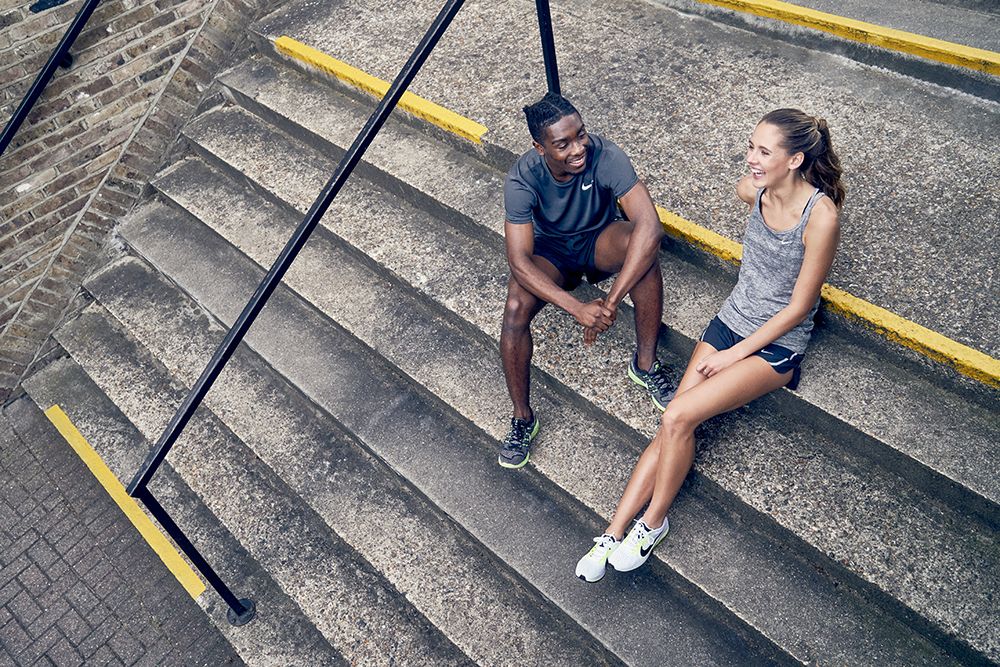
© Jack Terry

With the Sony being much smaller than a conventional DSLR, did you find the size harder to handle?

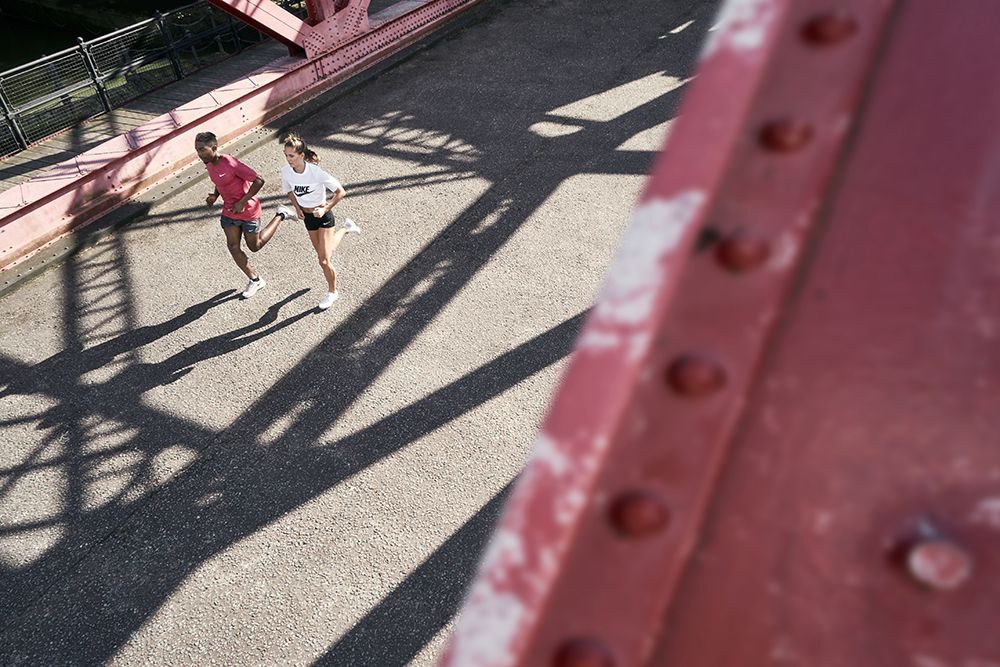
“The camera is a lot smaller than a DSLR like the 1D X, but I really liked that. At one point during the day I wanted to get a high angle shot of the runners and decided to climb a rather precarious bridge, which was a lot easier with the A9 than with my 1D X. I would have liked to try the battery grip as I’ve heard the balance is a bit better, especially with the longer lenses, but there wasn’t one available at the time.”

© Jack Terry

Would you use the A9 for your commercial work?

“Without a doubt. I shoot at a fast pace and usually with moving subjects. I felt the Sony gave me a clear edge compared to the Canon with focus. The ridiculously fast 20fps was also a massive plus point, especially when I could rely on every shot being sharp. I really think this camera is going to shake up the industry a bit and it’ll be interesting to see how Canon and Nikon react.”

Jack was speaking to Tim Stavrinou. You can see more of Jack’s work on his website www.jackterry.co.uk and follow him on Instagram @jackterryphoto

Thank you to Forte Model Management for supplying the athletes

SHOOTING WEDDINGS WITH THE FUJI GFX 50S image

Shooting Weddings with the Fuji GFX 50S

North West-based photographer David Stanbury reckons he has the best job in the world. For the last 20+ years, alongside his wife Jane, he has run an award-winning wedding & portrait photography business that grew out of a simple passion for photography & creating images that he loved.

David-Stanbury-Fujifilm-GFX50s-Profile-medium-format-camera-compressor

In 2013 David was given the highest honour of being awarded a fellowship in the British Institute of Professional Photography (BIPP) and the Society of Wedding & Portrait Photographers (SWPP) – the highest qualification a photographer can receive and to date has received over 200 International, national & regional awards for his photography.

Earlier this year, David was approached by Fuji, who were looking for professional photographers to test their GFX 50S. A longtime Hasselblad user, David already knew the benefits of medium format for his work and jumped at the chance to road test the then unreleased camera.

We recently caught up with David to talk photography and to hear his views on Fuji’s latest medium format camera.

David-Stanbury-Fujifilm-GFX50s-Profile-001-compressor© David Stanbury

This must be a busy time of year for you, so thanks for taking the time to speak to us. Can you tell us a little bit about your background and how you got into photography?

I think it’s more a case that photography found me. My parents bought me a camera for my birthday and my Dad said “now go to college & learn how to use it” at the time my reply was why? But that push really sowed the seeds for a passion that is still as strong nearly 25 years later. My break into wedding photography was just as chaotic. Whilst at college I had really fallen in love with the darkroom and hand printing B & W images. A friend of a friend was looking for a wedding photographer but at the time the Pros would only shoot colour and the couple wanted B & W only, so we were introduced and my first wedding I shot, processed and printed the images. As no ‘pro’ photographers seemed to be shooting in B & W I received a steady infux of enquiries and bookings; it seems crazy now but my USP was that I shot B & W photographs. My move into Professional photography was again just as chaotic. I worked for a company and they went bust overnight and with a new home and young family, I found myself out of work. So with £500 of my redundancy money we struck a deal with a local landlord giving me 3 months free rent on a studio, bought a couch, a desk and with 4 16 x 20 prints, opened our first studio…. Yes I still have the couch 😉

David-Stanbury-Fujifilm-GFX50s-Profile-004-compressor© David Stanbury

[gdlr_quote align=”center” ]We both are the luckiest people in the world, not only do we have the best job in the world travelling all over the world photographing gorgeous people happy & in love, but also being at the beginning of their new journey & documenting with our images two peoples lives change forever.[/gdlr_quote]

What equipment do you use?

In my bag at the moment is my Hasselblad H3D-31 II and a Canon 5D Mk III. Lens-wise I have an 80mm ƒ/2.8 & 28mm ƒ/4 for my Hasselblad (I love the 28mm and use this the most). On the Canon it’s a 16-35mm ƒ/2.8, 24-70mm ƒ/2.8 & 70-200mm ƒ/2.8.  I use the 70-200mm the most as I shoot my main images on the Hasselblad and candid on the Canon.

STANBURY-002-compressor© David Stanbury

Did you always want to be a wedding photographer?

I have always been the sort of person that if I did something I had to do it ‘properly’, so from the start I wanted to pay for new kit and pretty much from day one, was shooting portraits and then asked to shoot weddings and this then grew. I pretty much fell in love with weddings from my first one – I just loved the adrenalin rush that you get from working under the most intense pressure and then seeing the couples faces when you showed them their images. I’m also very much a people person, I love to socialise and as a wedding photographer you get to meet so many people who are always happy and its just such an addictive career.

STANBURY-003-compressor© David Stanbury

You’ve used Hasselblad alongside your Canon gear for many years. How did you find the GFX compared to the Hasselblad?

For me its unfair to compare the two as I’m shooting with an H3D and the jump from that to the GFX is immense. What I can say is that I’ve always wanted a medium format camera that has high ISO, low noise and is light enough so I can carry all day and the GFX certainly ticks these boxes. The GFX has so many features that I feel makes it the perfect medium format camera for wedding photographers, the touch screen is sharp, fast and the ability to tilt makes it easy to get those high and low angles. I really fell in love with the EVF and the lenses I found fast & incredibly sharp. I’ve pretty much used them all but the GF32-64mm ƒ/4 & GF110mm ƒ/2 are my favourites and could pretty much shoot a full wedding with just these 2 lenses.

David-Stanbury-Fujifilm-GFX50s-Profile-003-compressor© David Stanbury

Do you get involved in video with your wedding work?

I’ve just recently resurrected my YouTube channel (David Stanbury) to show Behind the Scenes footage from our personal shoots, weddings & workshops and am just as excited about getting ‘moving images’ into my workflow and think this is going to become a much bigger part of our shooting style.

STANBURY-001-compressor© David Stanbury

Do you shoot any personal projects or do the weddings keep you busy?

We are always busy with weddings, but I’m very much an advocate of ‘practice makes perfect’ and personal shoots are a perfect way to keep my brain ticking and my photography creative – It’s my testing ground for new ideas, styles and approaches to our photography. One thing I’m very mindful of is I NEVER want photography to become a job, so stepping out of my comfort zone, trying different things and creating new images is my hobby and what I do to relax.

David-Stanbury-Fujifilm-GFX50s-Profile-002-compressor© David Stanbury

You offer 1-2-1 training for wedding photographers. Is it rewarding to give something back to a business you obviously enjoy?

Yes,YES,YES!!!! I have seriously the best job in the world, people pay me to be part of the biggest day of their life, they pay me to travel the world to photograph their day, photography companies have asked me to be a part of their future plans and new products, photography has given me so many amazing memories but mostly amazing friends and I feel its my duty to give back to an industry that has given me so much. One thing I’m most proud of is that I hope people now see wedding photographers with the respect they deserve. We have the hardest job in photography, we have only one chance to get it right whilst working in the most demanding of situations, we don’t have the luxury of reshoots or 8 hours for 1 image, we HAVE to deliver the goods fast and consistently week in week out, and this is what I want to get across to new photographers on our workshops who come to learn how to create their signature images in this demanding world.

David was speaking to Tim Stavrinou

David Stanbury FSWPP, FBIPP

www.stanburyphotography.co.uk

About David

David Stanbury FBIPP, FSWPP is a Multi Award Winning Wedding Photographer based in the North West of England with a career spanning over 20 years & shooting weddings in the UK & Worldwide.

David’s accolades include over 200 National & Regional awards including UK Wedding Photographer of the Year, UK Wedding Album of the Year and a Finalist in the Prestigious Hasselblad Masters. David is proud to have received a Fellowship in Wedding Photography from the SWPP & the BIPP.

David has presented sell out workshops & seminars on all aspects of wedding photography throughout the UK, Europe and America. David is a photography consultant, mentor & Judge and has judged national & International photography competitions.

David’s style is described as stylish & timeless and is very much in demand by couples who require the very best in wedding photography. He has a passion for photography and creating the perfect image combining all the aspects of the Wedding but also understands that being a people person is just as important.


The Fuji GFX 50S is available to hire from our rental department, or for demonstration in our South London store. Call us on 020 7582 3294 or email admin@www.fixationuk.com for more info

Stuart Freedman | The Englishman and the Eel image

Stuart Freedman | The Englishman and the Eel

Stuart Freedman was born in London and has been a photographer since 1991. His work has been published in, amongst others, Life, Geo, Time, Der Spiegel, Newsweek, The Sunday Times Magazine and Paris Match covering stories from Albania to Afghanistan and from former Yugoslavia to Haiti.

We sat down with Stuart recently to talk photography and discuss his latest Kickstarter-funded project – The Englishman and the Eel; a journey into the culture of that most London of institutions, the Eel, Pie and Mash shop.

SFE_170113_253-compressor© Stuart Freedman

How did you first get into photography?

I did a politics degree and in my final year discovered a magazine called Photography. Edited by Nigel Skelsey (Telegraph) and Victoria Lukens (who I’d go onto work for at the Indie on Sunday Magazine a decade later) it was a beautiful and serious magazine (in contrast to all the other photo mags at the time) that showcased extraordinary work. I had no interest in photography up until that point but I thought, ‘this is what I really want to do’. I was of course a terrible photographer (still am) but that initial spark was the way in for me. After graduation, I came back to London put a really appalling folio together and just went from there… I first joined Select Photos in the early 1990s shooting mostly for European magazines moving to FSP/Gamma Presse a few years later. I’m very proud to have been a full member of Network Photographers in 1999 where I stayed until we sadly closed when I joined Panos.

[gdlr_quote align=”center” ]I’ve spent the last twenty five years making work mostly in Asia and Africa. I wanted however to re-explore my roots and The Englishman and the Eel is an attempt to do just that – recording these simple spaces that hold within them much of the memories of a rich, largely undocumented cultural heritage of generations of working-class Londoners in a city whose only constant is change.[/gdlr_quote]


SFE_161031_239-compressor© Stuart Freedman

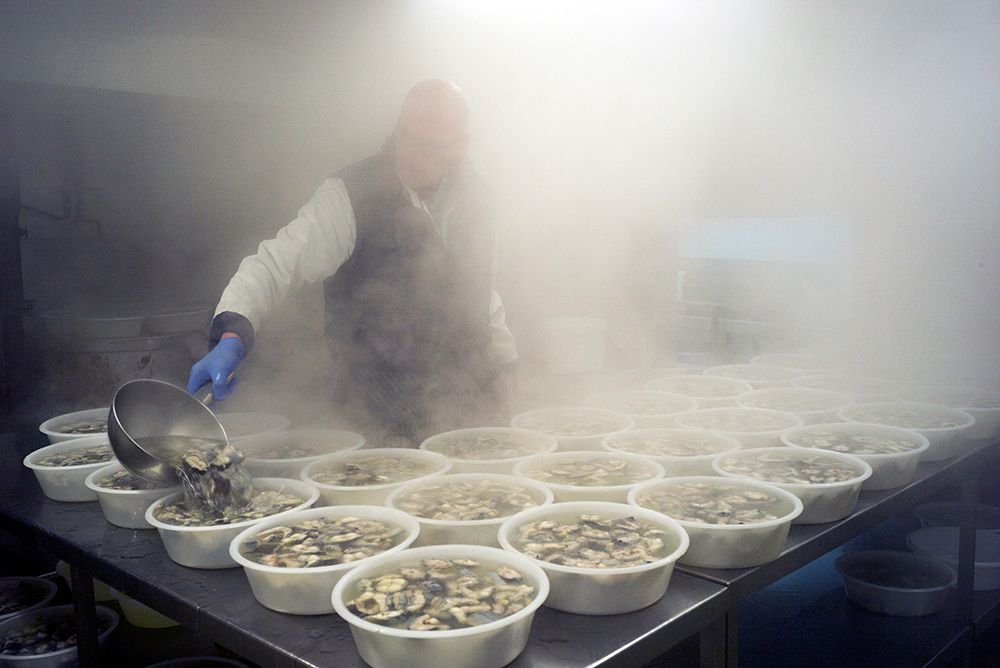
Says Stuart “Today’s eel, pie and mash shops are now havens for what the East End once was – but this is not a work of nostalgia. I’ve travelled to Lough Neagh in Northern Ireland to photograph eel fishing. I’ve made work at both Barney’s and Mick’s Eels, the two companies that process the fish. I’ve photographed and written about Millwall fans (who sing of the eel) and recorded those that now eat their pies and eels at home, too elderly and frail to journey to the shops. Lastly, I have followed the bleed of the East End to it’s new spiritual home in Essex where Pie and Mash shops are undergoing something of an renaissance. Identifying as they do with a re-imagined and distilled working-class culture that is geographically separate from their traditional roots.

SFE_170309_325-compressor© Stuart Freedman

“The Englishman and the Eel is not an encyclopaedic record of every shop, rather I’ve documented what I believe to be the most interesting and significant ones to make a book that I hope is a tribute to a changing institution and I’ve used the eel as a metaphor and symbol of that cultural change. In that sense the book is a companion piece to my last, The Palaces of Memories (Dewi Lewis 2015) – a finalist for best photobook at POYi in America in 2016 – about the Indian Coffee Houses that reminded me so much of my own past – the greasy spoon cafes of Hackney – during my twenty years working and living in India. The Coffee Houses were translational devices that allowed me to see an everyday India away from the stereotypes and understand that people were the same the world over. I hope The Englishman and the Eel will, in the same way, introduce the eel, pie and mash shops to another new audience.”

You’ve been a friend and customer at Fixation for many years. To what extent do you rely on us for your work?

Well, Fixation is the only place I’d ever come to – and ever have come to – for repairs and servicing. No question.

What camera equipment do you use?

I use a couple of Canon 5D Mk III’s and a Leica M-P(240) – but over the years, I’ve used pretty much everything from 6 x 6 to 5 x 4.

You mention that The Englishman and the Eel is almost a companion piece to your last book. Do you have any plans to produce a trilogy?

I don’t think so. I think I’ve said enough about spaces of memory and my past and the next book will be something completely different.

SFE_160706_229-compressor© Stuart Freedman

Stuart was speaking to Tim Stavrinou.

To learn more about the project, visit Stuart’s Kickstarter page.

The book will again be published by Dewi Lewis late in 2017.

www.stuartfreedman.com


SFE_161020_300-compressor© Stuart Freedman

About Stuart

His work has been recognised in many awards, from amongst others, Amnesty International (twice), Pictures of the Year, The World Sports Photo Award, The Royal Photographic Society and UNICEF. In 1998 he was selected for the World Press Masterclass and the following year for the Agfa Young Photojournalist of the Year.

In 1999 he was invited to speak on Capitol Hill in the USA about the atrocities in Sierra Leone where his initial work on the Mutilated premiered. In 2004 he addressed the Oxford Union about the continued suffering of that country.

His work has been exhibited widely. Solo shows include Visa Pour L’Image at Perpignan, The Scoop Festival in Anjou, The Leica Gallery in Germany, The Foire du Livre (Brussels), The Museum of Ethnography (Stockholm), The Association and the Spitz Galleries in London. His work on HIV/AIDS in Rwanda and from post-conflict South of Lebanon have toured extensively internationally.

He regularly judges awards and has twice been a judge for the Amnesty Media Awards. He has guest lectured to students in schools across the UK at amongst others, Swansea Metropolitan University, Falmouth University, Regents University and The London College of Communication (LCC). In addition he has written (and taught) the Photojournalism module for the Visual Journalism MA at Nottingham Trent University.

In 2016, his new book, The Palaces of Memory was a finalist at POYi for Best Photography Book of the Year and was chosen for The American Photography Annual (AI-AP).

He continues to write and photograph for a variety of editorial and commercial clients and is a member of Panos Pictures in London.

Hi, how can we help?